


Adice on cast management for parents
Plaster cast: how should it be kept?
- The cast must be kept “unloaded” , that is, slightly raised compared to the rest of the body, to avoid the creation of swelling in the foot.

- Place the cast on a soft support (a pillow, a doll, etc.) to keep it raised, but – especially in the first few hours – ensure that the heel part remains slightly suspended, without resting on it, to avoid creating pressure on the skin at that level (risk of bedsores)
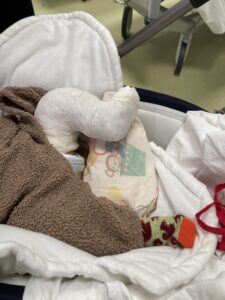
- Cleaning the cast: Cast will inevitably get dirty; you can clean it with a (slightly) damp cloth;
- Baby hygiene: obviously, bathing is not possible; to wash the baby or change his diaper, the cast must be protected (for example, with plastic bags, and by covering the top of the cast with cling film).
- In colder periods, you can cover the casts with socks
- Avoid pulling the limb along the cast: this could cause the cast to start to slip (see below)
Cast: How can you tell if something’s wrong? When should you contact your doctor?
- Circulation monitoring: It’s important to carefully check that the toes maintain their natural color. This check must be thorough and frequent in the first few hours after applying the cast, while in the following days, three or four times a day is sufficient. Warning signs may include white toes (blood isn’t reaching the toes, the cast may be tight) or dark toes (blood is struggling to drain from the toes): in this case, the cast may be tight or the foot may simply not have been held high enough (“off-loading”). Try keeping the cast off for a few minutes to resolve the problem. If the problem persists, contact your doctor.
- Motility monitoring : Periodically check that your baby is wiggling his toes by gently stimulating him. A cause for concern is if your baby doesn’t move his toes even when repeatedly stimulated.
- Temperature monitoring: fingers should remain warm. A warning sign may be the presence of cold fingers, if associated with one of the other symptoms (white or dark fingers, etc.).
- Swelling : Swelling of the toes can be a warning sign; it generally occurs if the cast has been kept down for too long. Elevate the leg and place it on a low-pressure area for a few minutes to resolve the condition. If the condition persists, contact your doctor.
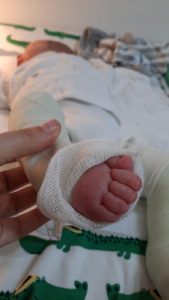
- Cast slippage: It’s essential to periodically check that the toes remain level with the edge of the cast and don’t tend to retract or even disappear. If the toes tend to retract, contact your doctor immediately.
In this case, the foot shifts from the corrected position and tends to slide up in the cast, bringing the heel upward. However, the heel
becomes jammed against the cast, and pushing at this level can lead to redness, bedsores, and ulcers. The same thing can happen to the back of the ankle, which creates friction on the front of the cast and can become red. In this case, the child generally begins to become restless or experience pain.
If the foot appears to have retracted and the toes are no longer visible or appear dark or swollen, contact your doctor or go to the emergency room immediately to have the cast removed.
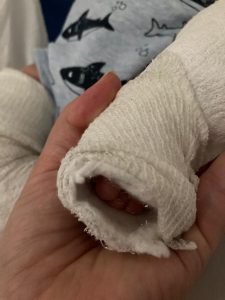
- Cast integrity: Contact your doctor if the cast breaks or loses its rigidity.
- Fever : temperature above approximately 38.5°C, in the absence of other causes