


Dr. Lampasi is a certified physician with the Ponseti International Association and is one of the world’s leading experts in the treatment of congenital clubfoot using the Ponseti method.
An international experience
The results of this experience have been published for several years in prestigious international journals, contributing in particular to the understanding of some specific aspects (epidemiology, classification, muscular aspects, motor development, interventions for relapses, etc.).
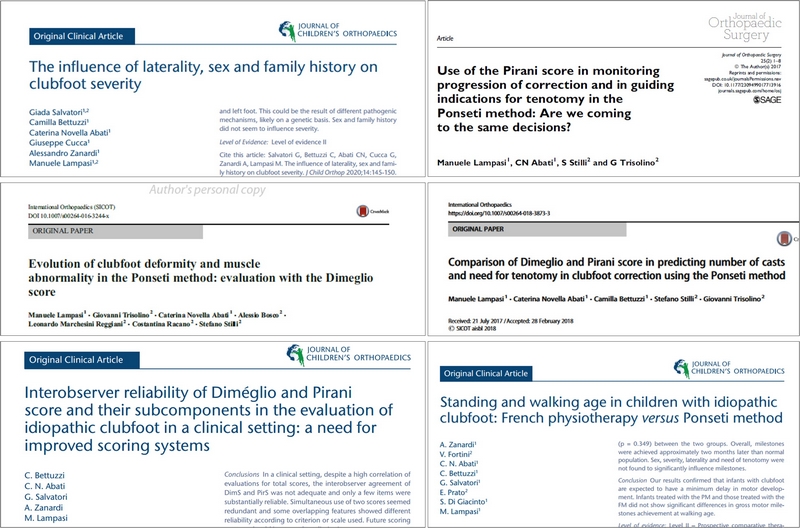
Over the years, Dr. Lampasi has contributed to the spread of the method in Italy, introducing the Ponseti method for the first time at the Rizzoli Orthopedic Institute in Bologna, then at the Meyer Hospital in Florence, where he was Head of Pediatric Orthopedics for years, and finally forming several Italian working groups.
Experience brings high-level results
The Ponseti method requires a learning curve to achieve the best results. Over the years, Dr. Lampasi and his team have perfected every aspect of the method to achieve maximum results in every situation, from the mildest conditions to the most severe deformities, even feet that have previously been treated incorrectly (atypical feet, etc.).
It is not important to correct the feet in most cases, it is necessary to learn to correct them in all cases.
What does certified or experienced doctor mean?
Some examples of what it means an experienced Center:
- The number of casts needed for correction is small. If the feet are treated properly, the number of casts needed is limited (usually 2 to 5). Unfortunately, it is not uncommon to see children who have had more than 12-15 casts made in centers with little experience.
- Low percentage of complications (large casts, swelling, slipped casts, sores, etc)
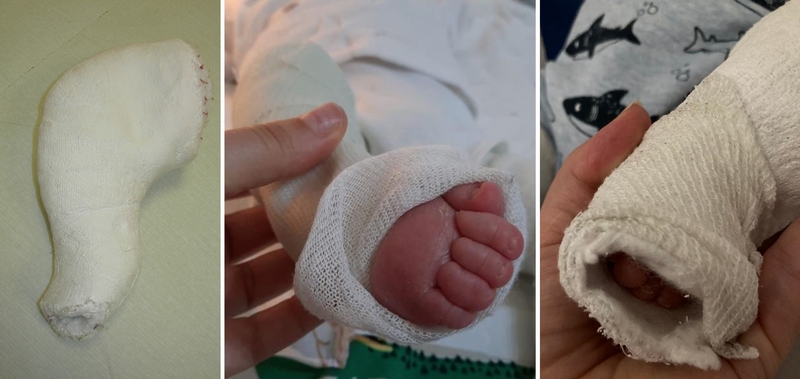 No skin lesions due to cast removal
- Ability to adequately manage relapses
- Tenotomy performed under local anesthesia and with a minimally invasive technique
Orthochildren Center is among the very few in Italy to perform tenotomy under local anesthesia
The procedure includes:
- Performing the tenotomy in the operating room, to allow for greater asepsis and greater safety
- Constant presence of an anesthesiologist, to ensure greater safety
- A skin cream is applied to the area where the tenotomy will be performed. The cream is left to act for a few minutes, covered with a film.
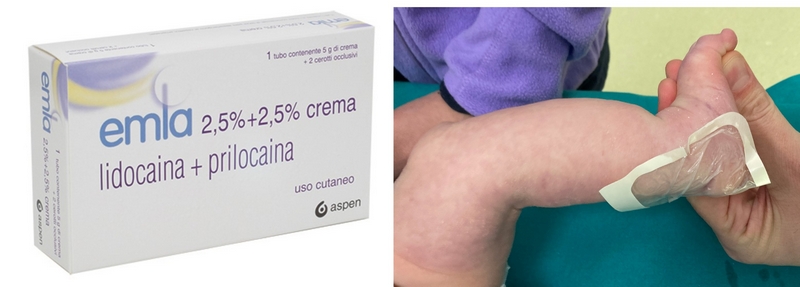
- A local anesthesia is applied to numb the deeper area, which would otherwise remain uncovered
- The tenotomy is performed with a microsurgery scalpel
- The final cast is then made immediately, in the presence of the mother, who can already breastfeed the baby in the meantime.
- A brief observation and the family can return home: no hospitalization, blood tests, or invasive procedures are necessary, except in truly exceptional cases.
Achilles tendon tenotomy: how big is the incision?
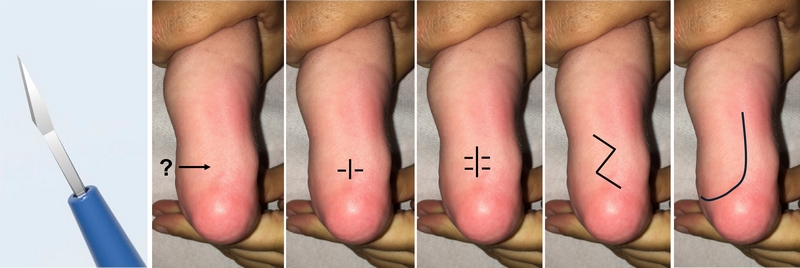
The tenotomy must be performed percutaneously, that is, without a real incision.
We use a microsurgery scalpel, the tip of which is practically like that of a needle.
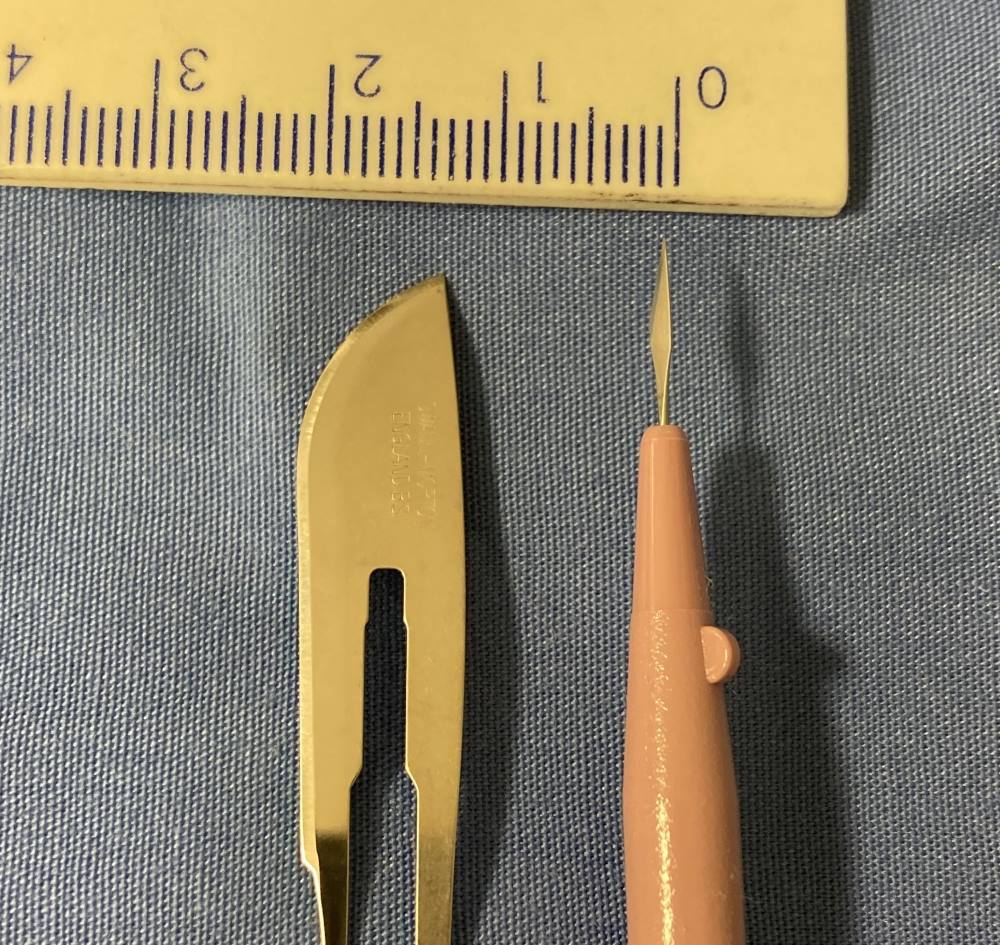
The resulting scar is practically invisible and does not get longer as the foot grows, unlike other possible incisions that we have seen performed in centers with little experience: scars with stitches, long scars, zigzag scars, very long scars (Codivilla), etc.
Why should you contact our Center for Achilles tendon tenotomy?
We have been performing this procedure in the manner described for several years now.
Our tenotomy sessions generally involve multiple patients followed and treated in the same way: from one to six patients per session.
Experience and organization make this procedure easier and safer, which, if performed in a hospital setting, would require general anesthesia for the young patient and a significant commitment for the families.