


Cerebral Palsy Surgery: Functional Orthopedic Care for Children
Children with Cerebral Palsy (CP) represent an extremely diverse and complex universe.
The orthopedic surgeon, with functional surgery , is called upon to treat these children not only based on the evaluation of the deformity, segment, or radiograph, as is done in other pathologies, but also on the overall clinical picture presented by the patient.
The approach will need to be tailored to that particular child, assessed at that precise moment , taking into account his or her deformities at different levels (foot, hip, knee, pelvis, trunk), his or her clinical form (hemiparesis, diplegia, tetraparesis, etc.), the organizational skills he or she has achieved and the obstacles he or she is encountering in acquiring further skills, as well as his or her probable evolution over time.
Given the extreme complexity of this condition, functional orthopedic surgery for children with Cerebral Palsy should be performed by surgeons who have specific training (and experience) for this pathology, but also the ability to relate to other professionals who care for these children, and the dedication (and time) to patiently evaluate the specific needs of the individual child.
Orthopedic surgery often constitutes a fundamental stage in the natural history of the disease and in the functional development of the child with Cerebral Palsy.
Treatment Goals: Functional Surgery for Cerebral Palsy
Appropriate clinical and instrumental assessments will be performed to define the presenting issues, therapeutic goals, and therefore the most appropriate functional surgery. These goals will vary greatly depending on the severity of the patient’s condition:
- For the most severe forms of tetraparesis, the goal will be to correct the structural deformities that alter the patient’s posture or cause pain, or prevent the onset of pain itself, or promote personal hygiene by family members/caregivers.

- For progressively milder forms (less severe forms of tetraparesis, diplegia, hemiparesis, etc.) the intervention will take on a true “functional orthopedic surgery” function , that is, it will have the objective of allowing the child to acquire new motor functions (or maintain others that he was at risk of losing) by eliminating the obstacles due to the deformities that have developed with growth.
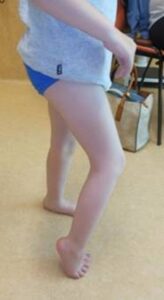
- In some cases, the aesthetic purpose should not be underestimated (for example, how a way of walking appears aesthetically), which for some patients can be just as important as a functional improvement.
Furthermore, it prevents excessive wear or degeneration of the joint surfaces , which function in an altered way and which over time risk leading to disabling pain.
Pre-operative evaluation may include:
- the static objective examination
- gait analysis ( for ambulant patients), accompanied by video recording and subsequent slow motion analysis
- computerized gait analysis to be performed in specialized centers
Functional surgery in children with cerebral palsy: what has changed?
In recent years, the functional treatment of children with Cerebral Palsy has introduced significant innovations, resulting in significantly improved outcomes. For this reason, it is important for orthopedic surgeons to be up-to-date with the most modern principles and techniques.
The new developments have primarily affected pre-operative assessments , as already mentioned (for example, it is no longer acceptable for certain functional surgery interventions to be performed on the basis of rapid observations).
Post-operative physiotherapy management protocols following functional surgery for Cerebral Palsy have also improved (for example, long cast immobilizations that were once required even only for soft tissue interventions or abduction splints for adductor tenotomy have been abandoned).
As regards the more orthopaedic aspects, the main innovations in orthopaedic surgery for Cerebral Palsy concern:
A) Pay attention to muscle saving:
- importance of not surgically weakening the muscles (especially the triceps, hamstrings, and iliopsoas)
- Aponeurotic or intramuscular surgical techniques are preferred , which theoretically have a lower risk of weakening the muscles. For example, Vulpius, Baker, and Strayer techniques are preferred over Zeta-shaped lengthening of the Achilles tendon. B) Introduction of muscle-tendon shortening procedures for specific cases:
- shortening of the patellar tendon ( patellar droop )
- shortening of the tibialis anterior

B) Concept of Lever arm dysfunction, i.e. dysfunction of the lever arm.
What does it involve? To put it simply: the effectiveness of a patient’s muscles in performing their function is impaired not so much by their weakness, but by the alteration of the lever arm with which they act .
For example, if a child’s foot is deformed by flatness or external rotation, when the child pushes off the ground to stand upright, they won’t be able to push off effectively, but their thrust will be dispersed on a different plane.
Similar conditions are found in many situations that often require corrective surgery (for example, femoral internal rotation combined with tibial external torsion).
This concept is fundamental in the treatment of patients with crouching and flexed-knee gait (see dedicated factsheets).
C) Greater attention to the correction of the rotation plane through derotative osteotomies.
Derotatory osteotomies have proven more effective than the correction previously sought through tendon surgery.

D) Improvement of bone synthesis by means of angular stability plates
More modern synthesis methods reduce the need for plaster casts, allow for rapid patient mobilization and faster recovery

E) MULTILEVEL Surgery
When possible, it is preferable to perform several corrections (bone and tendon) on multiple levels (hip, knee, foot) and bilaterally if necessary in a single operation and start a single re-education, rather than performing repeated operations and repeated and prolonged rehabilitation.

F) Improvement of hip dislocation reconstruction techniques (see sheet)
Greater attention should be paid to hip monitoring protocols , reconstruction of all involved components (femur, pelvis), the superiority of reconstruction over salvage procedures (resection, etc.), and collaboration between hip surgeons and scoliosis surgeons. See dedicated factsheet.

Patients from abroad: can OrthoChildren Center treat foreign patients?
Yes, many patients come from all countries (Europe and USA):
- the surgical equipe has a wide experience with Cerebral palsy patients (see related fact sheets and results)
- an intensive rehabilitation program can be included
- the procedure is less expensive than in USA and other countries
- Families take advantage of this opportunity to combine a trip to the beauties of Italy