


Multiple gradual fibrotomy is a surgical procedure used to reduce muscle tension that limits movement in patients with Cerebral Palsy.
It is a minimally invasive procedure that uses needles and microscalpels so as not to leave extensive scars.
Dr. Lampasi and his OrthoChildren team (Bologna, Italy) have been using this method for years, applying it both alone and in combination with other, more complex procedures.

Multilevel fibrotomy is an effective procedure when performed with the right indications and methods. However, it can be harmful if performed poorly or with incorrect indications.
Over the years, our team has progressively refined the indications compared to the original descriptions and the broad-spectrum applications initially suggested, to improve results and limit the complications recorded.
Gradual fibrotomy: advantages
- Selective fibrotomy is a minimally invasive procedure. No actual incisions are made, only small access points that do not require suture stitches.
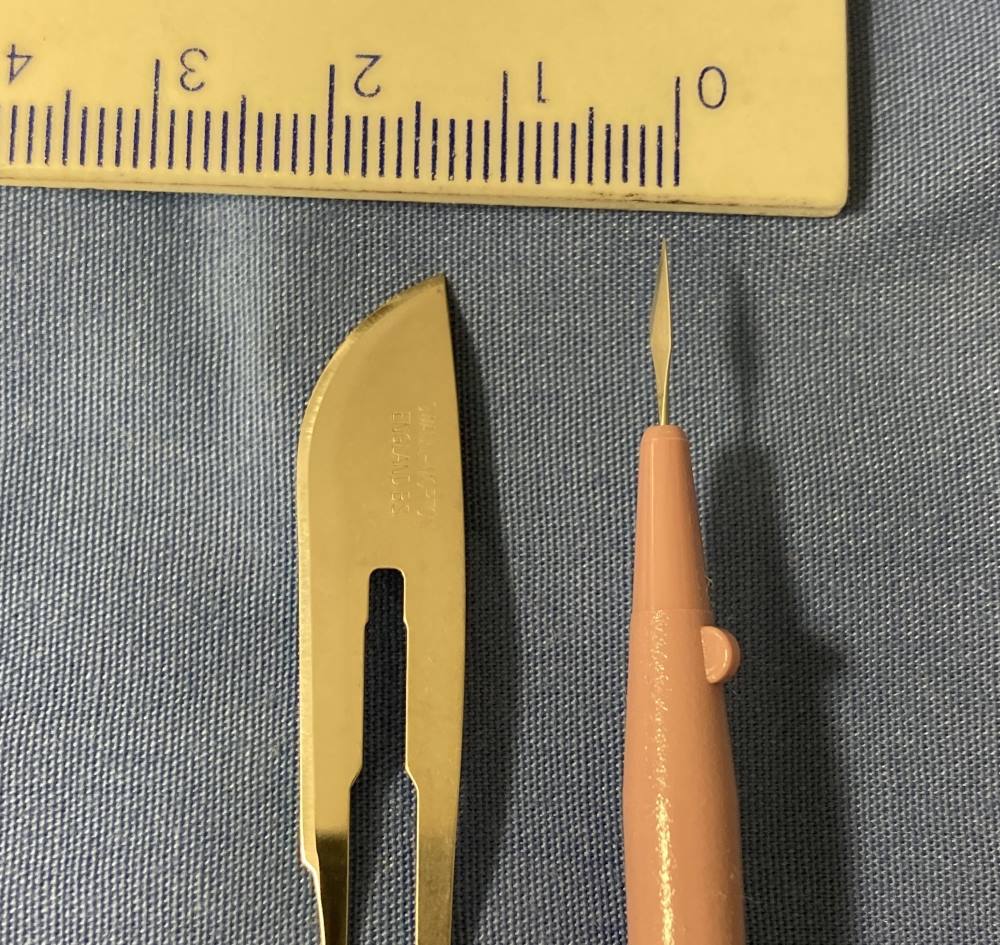
fibrotomy procedure. The tip of the microscalpel is slightly wider than a needle and leaves scars that do not require stitches.
- It is possible to treat different muscles during the same procedure, so that at the end of the procedure the muscle tension will be reduced in different parts of the body.
Multiple fibrotomy: advantages or disadvantages?
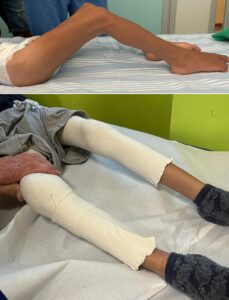
- In the original description, another advantage described was that the patient did not require any immobilization. Over the years, it has been seen that for many patients, even simple immobilization (brace) or temporary immobilization (cast) is more appropriate to improve results and limit postoperative muscle spasms.
- Another advantage initially advertised was the ability to perform the procedure with “light” and rapid anesthesia. It’s important to emphasize that every procedure must be performed safely, with the most appropriate anesthesia, and in facilities equipped to adequately manage patients who are often fragile or have multiple medical conditions.
Our team works in well-equipped facilities, with experienced pediatric anesthetists and the availability of sub-intensive care to ensure adequate clinical safety for our patients.
Ulzibat fibrotomy? SPML?
The fibrotomy procedure performed by our team falls within a category of procedures based on similar principles:
- Ulzibat’s gradual fibrotomy
- Nazarov myotenofasciotomy, Barcelona
- Selective Percutaneous Myofascial Lengthening (SPML) by Dr Nuzzo (USA)
Despite small differences in the descriptions of the respective authors, the principles on which these procedures are based are very similar: they are minimally invasive techniques, which act on the muscle bands (aponeuroses) rather than on the tendons (tenotomy) and which treat multiple muscles simultaneously.
These original descriptions had the merit of focusing surgeons’ attention on these aspects and adding a tool to the therapeutic possibilities of these patients.
Over the years, this technique has been embraced by centers with experience in NeuroOrthopedics, such as ours. We strive to use it with the appropriate indications, avoiding indiscriminate applications and combining it with all the other therapeutic options typical of a high-level specialist center.
Multiple fibrotomy: results
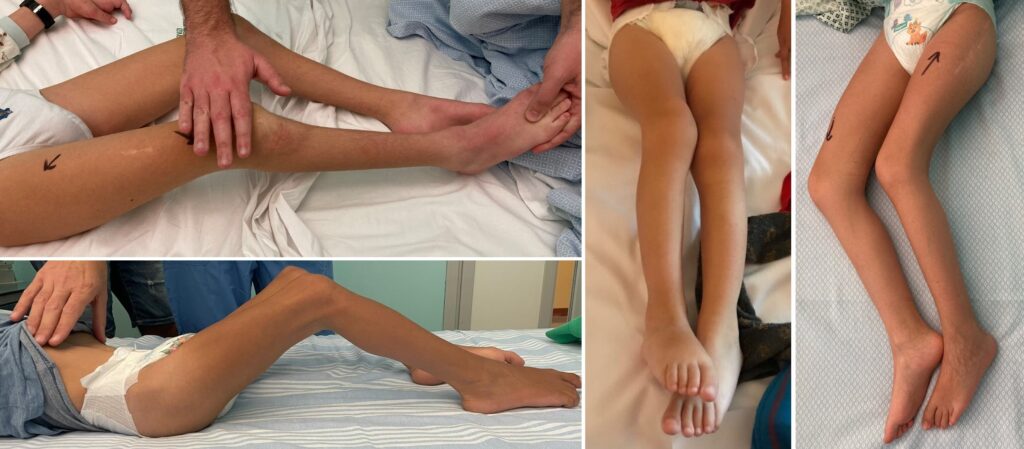
The results of multiple fibrotomy can be significant in terms of reducing muscle tension, with improved freedom of movement of some joints and of the patient more generally.
Multiple fibrotomy: before and after
Where is Multilevel Fibrotomy Performed?
Multilevel fibrotomy is performed in only a few specialized centers across Europe: Barcelona, San Marino, OrthoChildren Center in Bologna, and a few others. The limited number of centers with genuine experience in this procedure makes the choice of where to be treated particularly important.
Multilevel fibrotomy: when should it be performed?
Gradual fibrotomy is indicated in patients with Cerebral Palsy who have significant muscle tension that limits their movements.
It is a useful therapeutic tool, but not all patients are candidates for this procedure.
Over the years, critical analysis of the results and complications encountered in our experience and that of patients treated elsewhere has led us to progressively optimize the indications.
In the video we report a case of a typical patient who is a candidate for the procedure.
SEND US A VIDEO: follow the instructions
Gradual multiple fibrotomy: Is it worth trying anyway ? When not to do it?
Performing this procedure on all patients can be a significant mistake. For some patients, the procedure may be beneficial, for others it may be useless, and for still others it may even be harmful.
Gradual multiple fibrotomy: How to understand which muscles to treat?
Understanding which muscles to treat requires a great deal of experience in Cerebral Palsy and Neuroorthopedics in general.
The original description of the technique envisaged an operative planning based on the “manual” perception of muscular tensions with the relative compilation of a form for the areas to be treated.
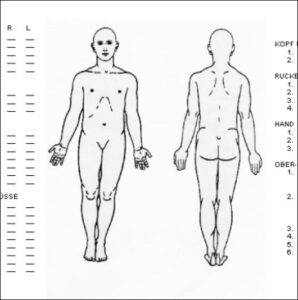
Over the years, this manual planning has been superseded by more in-depth and advanced knowledge in the field of Cerebral Palsy.
Gradual multiple fibrotomy: no risks? No complications?
Fibrotomy is a minimally invasive procedure that leaves very small external scars, but this does not mean that it cannot have complications.
Unfortunately, there are no high-quality scientific studies in the literature describing the long-term results of the procedure. In the original descriptions, the authors emphasized the absence of complications with the technique.
Over the years, experience has taught us that there are risks and complications: above all, there is a significant risk of muscle injury and weakening, which over time can pose a serious problem for patients.
In other words, the method can bring a significant improvement in the patient’s movements, which is perceived as a success by their families. However, this increased movement may be the result of a significant muscle injury, which over the years will lead to weak muscles that are no longer able to support the patient’s weight.
An increased number of patients in crouch (see dedicated sheet) is the main complication of patients treated indiscriminately with multiple fibrotomies.
Multiple gradual fibrotomy: Is immobilization necessary?
In the original description, no immobilization was applied. Over the years, it has been shown that for many patients, even simple immobilization (brace) or temporary immobilization (cast) is more appropriate to improve results and limit postoperative muscle spasms.
Gradual multiple fibrotomy: Is rehabilitation necessary?
The results of fibrotomy are optimized if patients are included within an overall therapeutic plan.
The therapeutic approach does not end with the fibrotomy, but requires a broader vision of both the correct rehabilitation to be performed and the correct brace to be applied.
Our team collaborates with high-level intensive rehabilitation centers, where patients are admitted after fibrotomy surgeries.
Gradual multilevel fibrotomy: can it be repeated?
Muscles subjected to fibrotomy have a tendency to create internal scars and these scars have a tendency to shorten again.
In this case, a new fibrotomy can be considered, but it is also appropriate to evaluate whether the situation has changed in the meantime and requires different procedures.
Multilevel fibrotomy: is it better to turn to those who only perform fibrotomies or to centers with experience in all aspects?
Cerebral palsy is a complex condition. It can no longer be treated as it once was, when tension was manually felt and a muscle was operated on. This view has been largely superseded over the years by more modern knowledge in this field.
A center that treats patients with this problem must be aware of all the therapeutic options and be able to apply them correctly, and not apply fibrotomy as the only therapeutic means for all patients.
Fibrotomy remains an excellent therapeutic tool if used by the right hands, with the correct indications and as part of a broader therapeutic project.
Before choosing a center, it is important to inquire about:
- The surgical team: does it only perform multilevel fibrotomies, or does it have experience in all procedures required for children with Cerebral Palsy? OrthoChildren Center has experience in all procedures for children with Cerebral Palsy.
- The anesthesiology team: does it have experience with complex pediatric patients? The OrthoChildren Center team works in well-equipped facilities, with experienced pediatric anesthetists and the availability of sub-intensive care.
- The rehabilitation team: once fibrotomy is performed, is rehabilitation available? OrthoChildren Center collaborates with high-level intensive rehabilitation centers.